






What to Expect During IRS Audit Representation: All You Need To Win!
In an IRS audit representation, a qualified tax professional communicates directly with the IRS on your behalf, manages all document exchanges, and works to protect you from penalties or overassessments. It is a formal process where your representative reviews your tax filings, prepares supporting evidence, and negotiates with auditors to ensure a fair outcome.
Learning how an IRS audit representation service saves you time and money is the key to your success during an inquiry into your tax return. Whether the audit targets your income, deductions, or business expenses, representation ensures the process stays organized, compliant, and professional.
In this guide, we’ll explain how the process unfolds step by step, how to prepare effectively, and the common mistakes to avoid during IRS audit representation.
The IRS is Forgiving Millions Each Day. You Could Be Next.
What is IRS Audit Representation?
IRS audit representation means having a qualified tax professional handle the entire audit process on your behalf. Once authorized, your representative communicates directly with the IRS, submits necessary records, and defends the accuracy of your tax filings. It’s a paid but rewarding strategy for high-income earners and savvy tax payers to avoid stressful back-and-forths and guarantee accurate and consistent responses.
A skilled IRS audit representative also controls the scope of the audit. They ensure only relevant records are shared without the IRS overreaching into unrelated areas of your finances. For individuals and business owners alike, this oversight is essential in keeping the process focused and fair.
The true value of audit representation lies in protection. When you hire an experienced IRS tax attorney, expect a legal defender and a companion for your tax activities. Your representative advocates for your rights, minimizes the risk of penalties, and relays feedback about your case.
How IRS Audit Representation Works
IRS audits follow a clear process, but each step carries important details that can determine whether the outcome is fair or costly. Approach every stage with a strategy within the law to protect your rights and minimize tax penalty vulnerability..
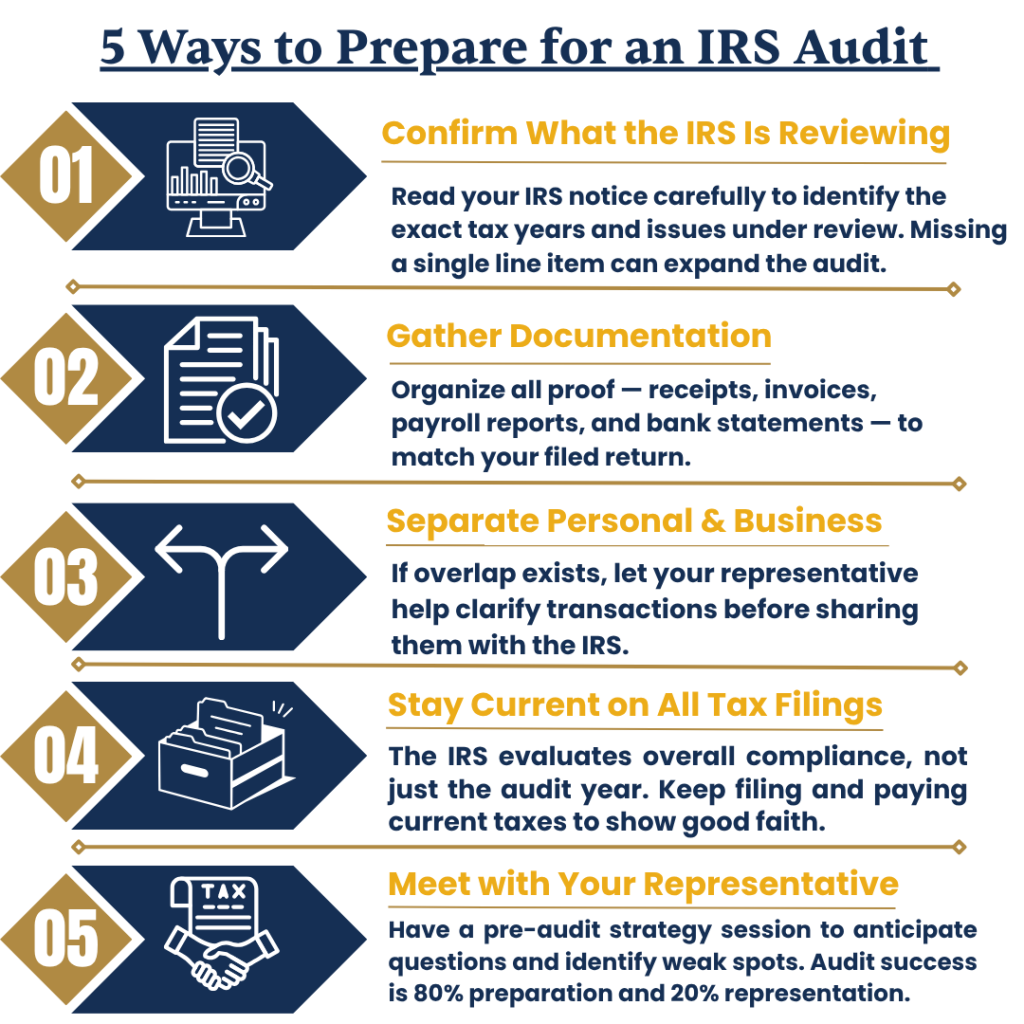
Step 1: Review the Audit Notice Carefully
The IRS audit notice mainly arrives by mail; otherwise, be wary of scammers. It will detail the tax year under review and items found suspicious, such as deductions for business meals, charitable donations, or reported income from contract work. Many taxpayers make the mistake of skimming the letter or assuming it’s a mistake; hence, the importance of having a tested and trusted audit representative.
Ignoring a notice, even for a few weeks, can lead to missed deadlines or automatic assessments. Left unattended, the IRS will complete the audit and make unfavorable changes to your tax return that could have been turned around. A tax representative immediately reviews the notice to confirm the audit’s scope and identify potential issues before responding to the IRS.
Step 2: Gather and Organize Documentation
Once you know what the IRS wants to see, your representative helps gather all related and relevant records, from receipts, bank statements, mileage logs, invoices, to payroll data. It’s a painstaking process that can easily lead to missing or disorganized documentation, which is one of the most common reasons taxpayers lose audits.
A good representative will not only collect these records but also reconcile them against your filed return to ensure consistency. Well-prepared documentation often determines whether the audit expands or stays contained.
Step 3: Communicate Strategically with the IRS
The IRS audit defense handles all communication with the IRS, whether through mail, phone, or in-person meetings. Here, you’ll save time and avoid saying something offhand that could complicate your case.
Many taxpayers who speak directly to IRS auditors offer unnecessary information that triggers broader inquiries and stricter penalties. Tax professionals earn a living by knowing what to reveal to the IRS while maintaining transparency without oversharing.
Step 4: Review Findings and Negotiate Adjustments
After reviewing your records, the IRS may issue a report proposing changes to your return. These adjustments can include disallowed deductions or additional tax assessments. Your representative carefully examines the IRS’s calculations, challenges any errors, and negotiates for reductions or alternative interpretations of the evidence.
At this stage, experience matters, as most successful outcomes result from identifying small factual discrepancies that change the overall liability.
Step 5: Appeal if Necessary
If the audit results remain unfavorable, you have the right to appeal. This process moves the case to an independent appeals officer, who reviews your position separately from the original auditor. A skilled representative prepares a legal argument backed by documentation and precedent to support your claim. In many cases, appeals lead to reduced assessments or waived penalties.
Ultimately, effective audit representation is about preparation and precision. Each step, from reading that first notice to closing the case, requires accuracy, documentation, and strategic communication to safeguard your tax return.
Common Mistakes to Avoid During IRS Audit Representation
Even honest taxpayers can make missteps during an audit that worsen their situation or delay resolution. Recognizing these mistakes early — and steering clear of them — can make your audit far less stressful and far more successful.
1. Ignoring or Delaying Response to IRS Notices
Many audits start with a simple letter requesting clarification. Delaying your response tells the IRS you are uncooperative, which can escalate the case or trigger penalties. Even if you are still gathering records, acknowledge receipt of the notice through your representative. The sooner the IRS knows you are engaged, the more flexibility you have in scheduling and negotiation.
2. Submitting Disorganized or Incomplete Records
The IRS wants evidence, not explanations. The IRS even provides audit technique guides (ATGs) explaining their evaluation technique, so you’re fully prepared for the inquiry, but many taxpayers fail to keep up.
Some end up neglecting items like loose receipts, incomplete spreadsheets, or missing invoices, which signal red flags. If something looks inconsistent, the IRS examiner may dig deeper or expand the audit to additional years.
The experienced tax attorneys at J. David Tax Law understand the need for organization and will even recreate missing documentation through secondary proof. We know a single missing item can be detrimental and prevent it. bank records or vendor statements, to ensure every deduction is supported.
3. Volunteering Unnecessary Information
Nervous taxpayers tend to overshare, trying to sound helpful. Unfortunately, that can lead to new audit questions. You should only answer what the IRS specifically asks. Your representative’s job is to interpret questions and limit responses to what is relevant. Simple, precise answers demonstrate transparency without exposing unrelated issues.
4. Failing to Stay Compliant During the Audit
An audit focuses on past years, but the IRS still pays attention to your current behavior. If you stop filing, skip estimated payments, or ignore correspondence during the audit, the IRS assumes noncompliance is ongoing. Staying current on all new tax obligations shows responsibility and may influence the auditor’s final recommendations.
5. Trying to Handle Complex Audits Alone
The audit process can quickly move from basic to technical. When your return involves business income, multiple deductions, or years of unfiled taxes, representation becomes essential. Tax attorneys understand IRS procedures, negotiation options, and appeal rights that individuals rarely use effectively on their own.
When to Bring in Legal Help Like J. David Tax Law
Not every audit requires an attorney, but knowing when to call in legal help can be the difference between a small correction and a financial crisis. Most taxpayers only seek help after the audit turns difficult when they receive proposed adjustments or realize the IRS may assess penalties. But professional representation is most effective at the very beginning, when the strategy and tone of communication are set.
Early Stages: Setting the Right Foundation
As soon as you receive your first audit notice, consulting a CPA or tax attorney ensures your case is handled correctly from the start. Typically, a representative from the firm will review your notice, identify what the IRS is targeting, and build a compliance roadmap to protect you from unnecessary exposure. With a proactive approach of working with a tax professional, you can stop penalties in their track through proper documentation and selective information sharing.
Mid-Audit: Correcting Errors and Controlling the Narrative
If you are already deep in the audit and the IRS begins questioning deductions or requesting additional years of returns, legal counsel becomes essential. J. David Tax Law attorneys are skilled at framing your documentation and explanations in a way that aligns with tax law, which can prevent harsher outcomes like fraud inquiries or extended examinations. Their experience also helps negotiate directly with the revenue agent or appeals officer, something individual taxpayers rarely succeed at on their own.
Post-Audit: Appeals and Settlements
Even after an unfavorable audit result, options exist. Through the appeals process, J. David Tax Law often secures significant reductions in tax assessments and penalties. For example, in one case, a client facing over $1.6 million in disallowed business expenses saw the adjustment reduced by nearly $1 million through expert negotiation and market-based analysis. The right representation can turn a losing audit into a manageable resolution.
In short, legal representation is not just about paperwork but a combination of strategy, precision, and protection. The sooner you involve an experienced tax law team, the more control you maintain over the outcome.
Protect Your Finances With Smart Audit Representation
An IRS audit can feel intimidating, but it shouldn’t have to end badly. Most taxpayers who go through audits discover that the outcome depends far more on preparation and representation than on the audit itself.
You need meticulous record documentation and calculated, consistent responses for success, which a tax attorney, in addition to tax law expertise, brings to the table.
At J. David Tax Law, our audit representation, we don’t “fight” the IRS, but navigate the system intelligently to your advantage. We guarantee protection of your rights, limited exposure, and a fair resolution. Trust our seasoned attorneys to handle your audit with professionalism, whether it involves disallowed deductions, business expenses, or multiple years under review.
Book a free consultation today to discuss your IRS audit situation.