






After you apply for an Offer in Compromise, the IRS reviews your case to verify your financial information and determine whether your offer represents the most they can collect. The process usually takes six to nine months, though some cases move faster or slower depending on accuracy, documentation, and IRS workload.
During that time, your application isn’t sitting idle. The IRS examines your income, expenses, assets, and compliance history line by line. They may reach out for updated records, clarification on your forms, or proof that you’re current with all tax filings and estimated payments.
This guide walks you through exactly what happens after submission, from the review timeline to what to expect if your offer is accepted or rejected. You’ll learn how to stay compliant during the waiting period and what options remain if the IRS says no.
Tax attorney to review and present Offer in Compromise applications.
Key Takeaways
- The IRS typically takes six to nine months to review an Offer in Compromise.
- During review, the IRS may request updated documents or clarification on your financial information.
- If your offer is accepted, you must stay fully compliant for five years to keep your settlement valid.
- If your offer is rejected, you have 30 days to appeal or resubmit with stronger documentation.
- Staying organized, honest, and responsive throughout the process greatly increases your chance of approval.
The IRS is Forgiving Millions Each Day. You Could Be Next.
The Offer in Compromise Timeline: From Submission to Decision
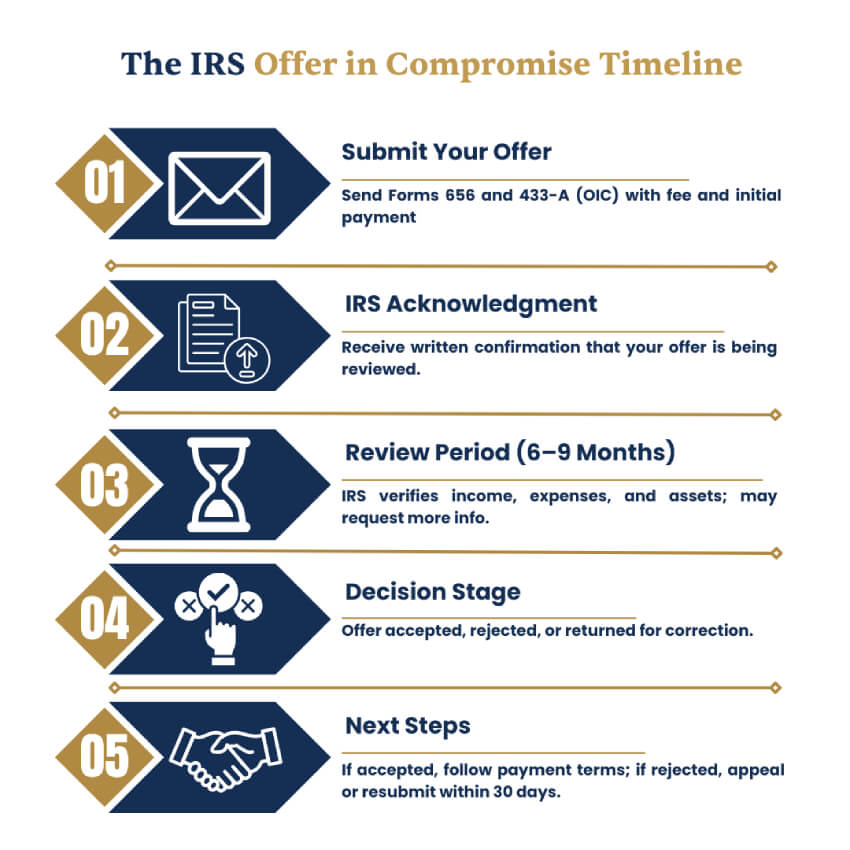
The IRS typically takes six to nine months to review an Offer in Compromise, though complex cases can take longer. The exact timeline depends on how complete your application is, how quickly you respond to requests, and the IRS’s current backlog.
Once your package is received, the IRS sends a written acknowledgment confirming that your offer is under consideration. From there, the file is assigned to a specialist who reviews your forms, financial statements, and supporting documentation. This review includes cross-checking your income, expenses, and assets against IRS and third-party records to ensure accuracy.
If your information is complete and your offer appears realistic, the IRS continues the review until a decision is made. If documents are missing or inconsistent, you’ll receive a written request for clarification, which pauses the review until you respond. Failing to reply within the requested timeframe can cause your offer to be returned without a decision and start the process over.
What Happens During the Review Period
While your Offer in Compromise is under review, the IRS examines every detail of your financial situation to confirm the accuracy of your forms. This includes verifying income, expenses, assets, and debts against tax filings, pay statements, and bank records.
The IRS may contact you or your representative to request additional documentation. These requests are common and should be handled quickly, preferably within 30 days. Delays or incomplete submissions can stop the process or lead to your offer being returned without review.
During this period, it’s critical to stay compliant. Keep filing any new tax returns, pay current-year estimated taxes, and maintain accurate records of all financial activity. The IRS expects ongoing compliance while evaluating your offer, and even one missed filing or payment can undermine your case.
When Your Offer Is Rejected: Your Three Paths Forward
If the IRS rejects your Offer in Compromise, it does not mean you are out of options. A rejection simply means the IRS believes your offer does not reflect your true ability to pay or your documentation was incomplete.
When you receive the rejection letter, review the explanation carefully. The IRS provides reasons for its decision, which can help you decide whether to appeal, adjust, or choose another form of resolution. You have 30 days from the date of the rejection notice to act.
1. File an Appeal
If you believe the IRS made an error, you can appeal by submitting Form 13711, which a Request for Appeal of Offer in Compromise document. The appeal allows you to clarify information, present updated financial data, or correct misunderstandings that affected your original decision.
2. Resubmit a Stronger Offer
You can reapply with a revised offer that includes corrected figures, new documentation, or updated income information. This is common when your financial situation changes or when your first offer underestimated what the IRS considers reasonable.
3. Explore an Alternative Resolution
If you no longer qualify for an OIC, you may be eligible for an Installment Agreement or a Currently Not Collectible status. These alternatives can provide relief by spreading out payments or delaying collection until your finances improve.
Acting quickly after rejection gives you the best chance of success. Waiting too long can reset the process and extend the time before the IRS will consider a new offer.
Moving Forward After an OIC Decision
Once the IRS makes its decision, stay compliant and organized. If your offer is accepted, keep filing and paying on time for the next five years to protect your settlement. Any missed filing or payment can reopen your case and reinstate your full balance.
If your offer is rejected, review the IRS letter carefully to understand why. Fix the issue before appealing or resubmitting, as many taxpayers succeed on their second attempt once their documentation and calculations are corrected.
If you’re unsure where to start or want help strengthening your case, schedule a free consultation with a J. David Tax Law tax attorney. Our attorneys review your file, identify what went wrong, and help you rebuild your offer the right way.
Frequently Asked Questions About the Offer in Compromise Process
How long does the Offer in Compromise process typically take?
The IRS usually takes six to nine months to review an Offer in Compromise. Timelines vary based on case complexity, documentation accuracy, and IRS workload.
What happens if my Offer in Compromise is rejected?
You’ll receive a written explanation outlining the reasons for denial. You can appeal within 30 days or resubmit a corrected offer with stronger documentation.
Does an Offer in Compromise really work?
Yes. An accepted OIC legally settles your tax debt for less than you owe, but only if you meet strict eligibility and compliance requirements.
What is the success rate of Offers in Compromise?
According to the IRS Data Book, roughly 20 to 25 percent of OIC applications are approved each year. Most rejections result from incomplete forms, inaccurate data, or missing returns.
How many times can you do an Offer in Compromise?
There’s no formal limit on how many times you can apply, but the IRS will only consider new offers if your financial situation has changed. Submitting multiple incomplete or unrealistic offers can harm your credibility.