






Last updated on September 17th, 2026 at 01:49 pm
CBE Group is a private collection agency that may collect certain overdue federal tax debts on behalf of the Internal Revenue Service through the IRS Private Debt Collection Program.
In some cases, the IRS assigns inactive tax accounts to approved contractors such as CBE Group to contact taxpayers about unpaid balances and potential payment arrangements. Before responding to a call or letter from a collection agency, taxpayers should verify that the contact is legitimate and connected to an official IRS assignment.
If CBE Group contacts you about taxes, confirm these three things first:
- Look for IRS Notice CP40
The IRS sends this letter before assigning your account to a private collection agency. It identifies the contractor authorized to contact you. - Verify the caller using the Taxpayer Authentication Number
IRS contractors must follow a two party verification process to confirm both the caller and taxpayer identities. - Never send payments through unusual methods
The IRS and its contractors will not demand payment through gift cards, cryptocurrency, or wire transfers.
Understanding how the IRS private debt collection program works, what authority CBE Group has, and what rights you have as a taxpayer can help you respond appropriately and avoid common tax collection scams.
The IRS is Forgiving Millions Each Day. You Could Be Next.
What Is CBE Group?
The CBE Group, Inc. is a U.S. based collection agency that works with both private companies and government agencies to recover outstanding debts. The company is headquartered in Iowa and has operated in the debt recovery industry for decades.
To better understand the role of this organization, here are a few key points about CBE Group and its collection activities.
- A Third Party Debt Collection Agency
CBE Group operates as a debt collector that helps organizations recover unpaid balances from individuals or businesses. This includes both consumer accounts and certain government related debts.
- Works With Government Agencies Including the IRS
In some cases, CBE Group may participate in the IRS Private Debt Collection Program, which allows the Internal Revenue Service to assign certain inactive tax accounts to authorized contractors.
- Collects Different Types of Debts
The company may be involved in collecting different types of debts, including credit related balances, telecommunications bills, education related obligations, and certain government debts.
- Acts as a Contractor Rather Than the Tax Authority
Even when contacting taxpayers about federal tax debt, the CBE Group collection agency does not replace the IRS. Instead, it acts as a third party contractor that communicates with taxpayers about unresolved balances and potential payment arrangements.
- Does not Have IRS Enforcement Powers
Unlike the IRS, a CBE group debt collector cannot issue a federal tax lien, impose a tax levy, or seize assets. Those enforcement actions remain the authority of the IRS.
Why Is the CBE Group Calling Me?
If you receive a call or letter from CBE Group, it usually means an organization has assigned your account to a collection agency to recover an unpaid balance. In some situations, this may involve federal tax debt that the IRS has transferred to a private contractor.
However, not every contact from CBE Group is related to taxes. Because the company collects several types of debts, the reason for the communication can vary depending on the account involved. Once an account is assigned to a private collector such as CBE Group, the underlying balance has been accruing penalties and interest for some time already. Before returning a call from a private collection agency, get ahead of the penalty math by confirming what is actually owed rather than simply relying on the figure a collector will cite. To determine why the company is contacting you, consider the following two possibilities.
When the IRS assigns a tax account to a private collection agency, it first sends an official letter known as Notice CP40. This notice informs you that your tax debt has been transferred to an authorized contractor and identifies the collection agency that may contact you. Before responding to a collector, review how to read an IRS collection notice so you can verify the notice type, response deadline, and whether the account was actually assigned to an authorized contractor.
The CP40 notice typically explains:
- the name of the assigned collection agency
- how the agency will contact you
- the verification process used to confirm the caller’s identity
- instructions for making payments or resolving the account
If you received this notice, a call or letter from CBE Group may be part of the IRS private debt collection process.
If you have not received a CP40 notice from the IRS, the contact may relate to a different type of debt or could potentially be a scam.
Before sharing any personal information, it is important to confirm:
- whether the account is actually connected to the IRS
- whether the caller can complete the IRS authentication process
- whether the communication matches official IRS procedures
Scammers sometimes impersonate tax collectors, which is why verifying the source of the call is critical before discussing your financial information.
Is the CBE Group a Legitimate Company?
Yes, CBE Group is a legitimate collection agency that works with both private organizations and government agencies to recover certain types of unpaid debts. However, the fact that a company is legitimate does not automatically mean that every call claiming to come from that company is genuine. Scammers sometimes impersonate collection agencies or IRS representatives in an attempt to pressure individuals into making fraudulent payments.
How Do I Know If I’m Being Scammed?
Taxpayers should always confirm the legitimacy of any tax related collection call before sharing personal or financial information. Warning signs of a possible scam may include:
- You never received IRS Notice CP40
The IRS must send this letter before assigning a tax account to a private collection agency. - The caller demands immediate payment
Scammers often pressure individuals to pay quickly using unusual payment methods. - The caller refuses to verify their identity
Legitimate contractors must follow IRS verification procedures when contacting taxpayers. - Threats of arrest or criminal penalties
The IRS and authorized collection agencies do not threaten taxpayers with immediate arrest during initial collection contact.
How the IRS Private Debt Collection Process Works
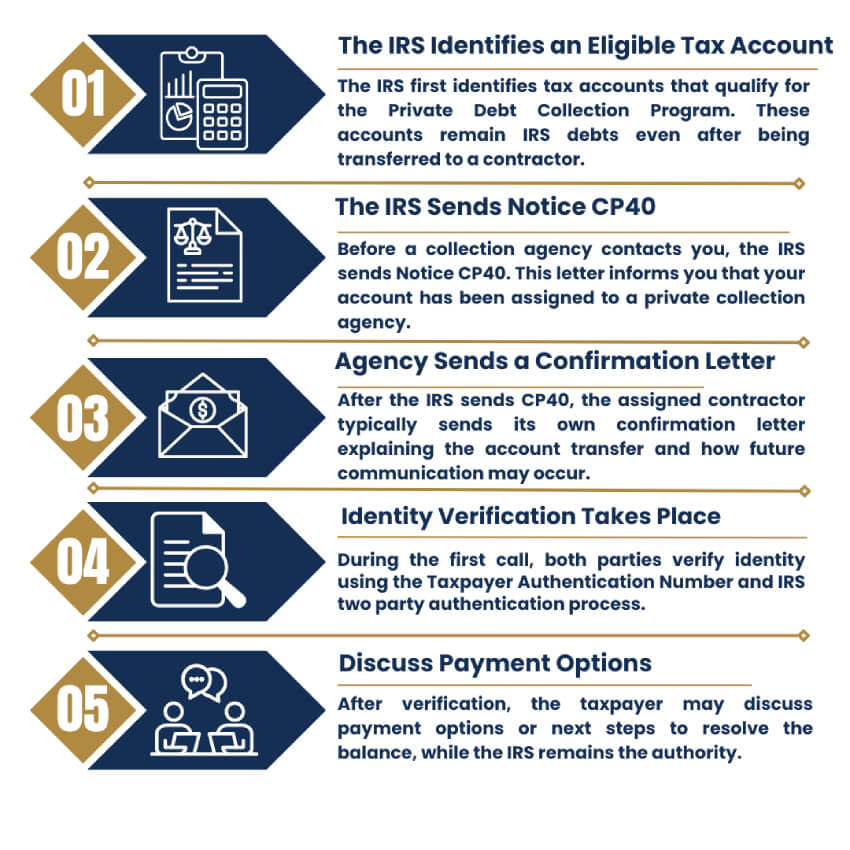
When certain overdue tax accounts become inactive, the IRS may assign them to approved private collection agencies. The following steps explain how the process typically works when a company like CBE Group becomes involved.
What Powers Does CBE Group Have?
When CBE Group contacts taxpayers about an assigned IRS account, it is acting as a private collection agency for IRS, not as the tax authority itself. This distinction is important because the agency’s role is limited to communication and coordination, while the IRS retains control over enforcement and final decisions related to the debt.
What CBE Group Can Do
- Contact taxpayers about assigned accounts
CBE Group may reach out by phone or mail to inform taxpayers about an assigned IRS account and explain the balance owed. - Discuss payment arrangements
Representatives may discuss potential payment options and provide information about ways to resolve the tax debt. - Provide account information
The agency can answer questions about the assigned account, including outstanding balances and general next steps for addressing the debt.
What CBE Group Cannot Do
- Issue federal tax liens
Only the IRS has the authority to file a federal tax lien against a taxpayer’s property. - Impose tax levies or seize assets
Collection agencies cannot garnish wages, levy bank accounts, or seize property to collect tax debt. - Make final decisions on tax resolution programs
Programs such as installment agreements, penalty relief, or Offers in Compromise must ultimately be approved by the IRS.
How to Deal With CBE Group?
If CBE Group contacts you about a tax debt, it is important to respond carefully and verify the situation before taking any action. Because the company may be acting as a contractor for the IRS, taxpayers should confirm the legitimacy of the contact and understand their options for addressing the account.
The following steps can help you handle communication with CBE Group more confidently.
Before discussing any account details, verify that the contact is legitimate. The IRS typically sends Notice CP40 before assigning a tax account to a private collection agency. You can also confirm the caller’s identity through the IRS Taxpayer Authentication Number verification process before sharing personal information.
Maintain records of every interaction with the collection agency. This may include the date and time of the call, the representative’s name, and the phone number used. Keeping accurate records can help you track the conversation and address any issues that arise later.
In many situations, taxpayers may still make payments directly to the IRS rather than sending money to the collection agency. Confirm the correct payment instructions before submitting any payment related to your tax debt.
CBE Group representatives may discuss potential payment arrangements or next steps for resolving the assigned account. However, the IRS ultimately determines eligibility for tax resolution programs, such as installment agreements or other payment options.
Only provide sensitive financial or personal information after verifying the legitimacy of the caller and confirming that your account has been properly assigned to a private collection agency. Taking these precautions can help reduce the risk of tax related scams.
What Happens If I Ignore the CBE Group?
When a taxpayer does not respond to communication from a private collection agency, the account may eventually be returned to the IRS. Once the IRS resumes direct collection efforts, it may pursue additional actions to recover the unpaid balance.
These actions can include:
- Issuing further IRS notices
The IRS may send additional collection notices requesting payment or updated financial information. - Assessing additional penalties and interest
Unpaid tax debts can continue to grow over time as interest and penalties accumulate. - Resuming IRS collection enforcement
In certain situations, the IRS may consider enforcement measures such as federal tax liens or levies if the debt remains unresolved.
Before the account returns to IRS enforcement, consider speaking with tax attorneys at J. David Tax Law. We have helped clients save over $800 million in IRS tax debt cases.
What Rights Do I Have?
Even when a private collection agency such as CBE Group contacts you about an assigned tax account, you still retain important legal protections. Both IRS rules and federal consumer protection laws limit how private collectors may communicate with taxpayers and ensure fair treatment during the collection process.
Taxpayer Bill of Rights
The IRS recognizes a set of fundamental protections known as the Taxpayer Bill of Rights. These rights apply even when your account is assigned to a private collection agency and ensure that taxpayers are treated fairly throughout the collection process.
Key protections include the right to:
- Be informed about your tax obligations and the status of your account
- Receive quality service when communicating with the IRS or its authorized contractors
- Challenge the IRS position and be heard if you disagree with a tax determination
- Appeal an IRS decision in an independent forum
- Retain representation, such as a tax attorney or authorized representative
These protections remain in place regardless of whether the IRS or a contractor is contacting you about the debt.
Your Rights Under the Fair Debt Collection Practices Act
Private collection agencies working under contract with the IRS must also follow certain rules established under federal consumer protection laws. The Fair Debt Collection Practices Act (FDCPA) regulates how debt collectors may communicate with individuals and limits abusive or deceptive practices.
Under these rules, collectors generally cannot:
- Use harassing or threatening language during communication
- Contact you at unreasonable hours or locations
- Provide false or misleading information about the debt
- Engage in unfair or deceptive collection tactics
These protections help ensure that taxpayers are treated respectfully and have clear information about the debts they are being asked to address.
Common Issues and How to Handle Them
Practical guidance for taxpayers dealing with private debt collectors on IRS-assigned accounts.
Can’t Afford to Pay
Many taxpayers are unable to pay their full balance immediately. The IRS may offer relief options such as installment agreements. If you are unsure how to properly negotiate a structured repayment plan with the IRS, seeking professional installment agreement help can ensure you secure a manageable monthly amount.
Negotiate or Go Direct
Some taxpayers prefer working directly with the IRS. Understanding your options helps you choose the best path forward.
Improper Contact
If communication feels aggressive or improper, document interactions and consider professional legal support.
When Should You Contact a Tax Attorney?
Engaging a tax attorney can provide clarity and protection when addressing complex or high-stakes tax matters. Professional guidance may be particularly beneficial in situations where:
- The debt is substantial – Large outstanding balances increase the risk of penalties, interest, and enforcement actions, making professional oversight essential.
- Enforcement actions are possible – If liens, levies, or wage garnishments are threatened, a tax attorney can advise on your rights and potential strategies to prevent or minimize these actions.
- Multiple tax years are involved – Cases spanning several tax periods often require careful review to ensure accurate reporting and to avoid compounding errors or liabilities. When multiple tax years are involved, the account may include old balances, missed filings, penalties, and interest that need to be separated before any payment arrangement is discussed. Understanding what happens after years of not filing can help taxpayers respond to CBE Group while still protecting their rights with the IRS.
- Relief programs require negotiation – Programs such as installment agreements, offers in compromise, or penalty abatements often involve detailed documentation and formal negotiation, which a qualified attorney can manage effectively.
Conclusion
CBE Group is a private collection agency that may contact taxpayers about certain IRS debts through the Private Debt Collection Program, but the IRS remains the authority responsible for enforcement and final decisions on tax resolution. If you receive a call or letter from CBE Group, it is important to verify the legitimacy of the contact, understand your rights, and review your available options before taking action. Addressing the situation early can help prevent penalties, additional interest, or potential enforcement measures. If the matter involves significant tax debt, multiple years, or complex negotiations with the IRS, seeking guidance from experienced tax attorneys may help you evaluate your options and move toward a resolution with greater confidence.
Frequently Asked Questions
What does the CBE Group collect for?
The CBE Group collects outstanding debts on behalf of both private organizations and government agencies, including certain federal tax debts assigned by the IRS. They may contact taxpayers regarding unpaid balances, payment arrangements, or resolution options.
What happens if I ignore the CBE Group?
Ignoring the CBE Group does not eliminate the debt. Accounts may eventually return to the IRS, potentially resulting in additional notices, penalties, or enforcement actions such as liens or levies.
Why am I getting a letter from the CBE Group?
A letter from the CBE Group typically indicates that a debt has been assigned to them for collection. If related to taxes, it often follows IRS Notice CP40 and outlines the account balance and verification steps.
Is CBE a collection agency for the IRS?
Yes, the CBE Group acts as a private collection agency under the IRS Private Debt Collection Program. While they can contact taxpayers and discuss payment options, they do not have enforcement powers like liens or asset seizures.
What is CBE Group on a credit report?
The CBE Group may appear on your credit report if they have reported an unpaid debt to the credit bureaus. It will typically list the amount owed, the original creditor, and the date of the account assignment. Regularly reviewing your credit report can help ensure accuracy and detect any errors.
What is the CBE Group lawsuit?
A CBE Group lawsuit refers to legal action filed to collect an unpaid debt. While rare, the company may pursue court proceedings if prior collection attempts fail. Taxpayers are advised to consult a qualified attorney before responding to any legal notice to understand their rights and potential defenses.